Ask travellers what they remember most about Marrakech and many will not name a monument. They will talk about a meal — the smell of cumin and saffron, bread still warm from the oven, a glass of mint tea poured from high above the table. A cooking class is the easiest way to bring that home with you.
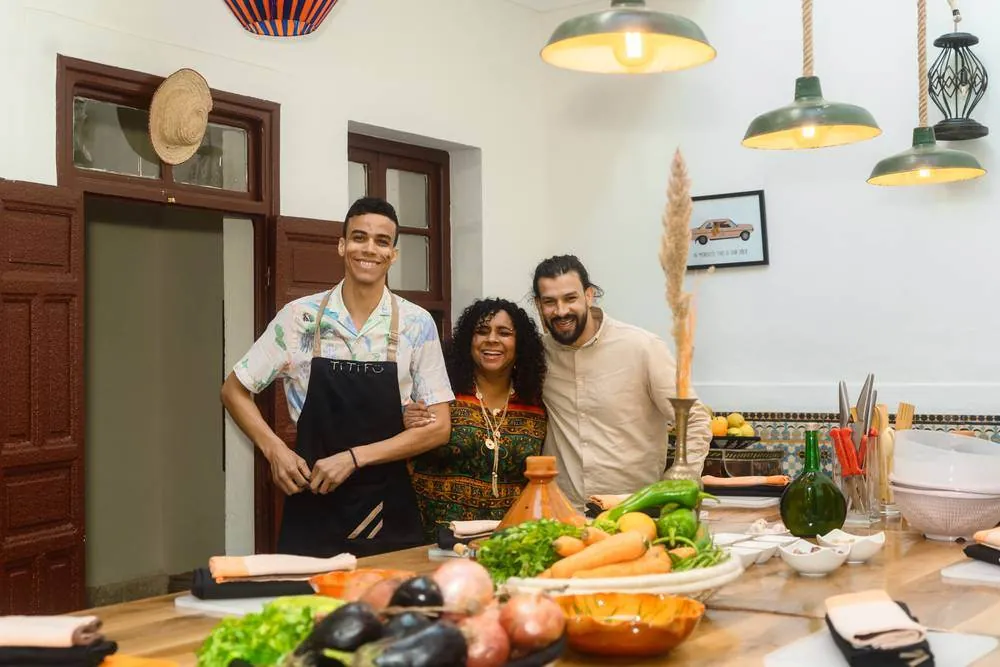
I'm Abdou, and I host cooking classes in our riad kitchen in Marrakech. Here is an honest guide to what a class looks like, what you will cook, and how to choose one that suits you — whether you book with us or not.
Why take a cooking class in Marrakech?
Moroccan food is a family cuisine. The best tagines are not made in restaurants; they are made in homes, slowly, by people who learned by watching their mothers and grandmothers. A good class gives you a seat at that kind of table.
- You learn by doing. Chopping, spicing and shaping bread with your own hands teaches more than any recipe card.
- You meet local people. Between steps there is time to talk about daily life, family traditions and the city.
- You eat what you cook. The class ends with a full meal — often the best one of the trip.
- You take Morocco home. Once you understand the spice base of a tagine, you can cook it anywhere.
What happens during a typical class
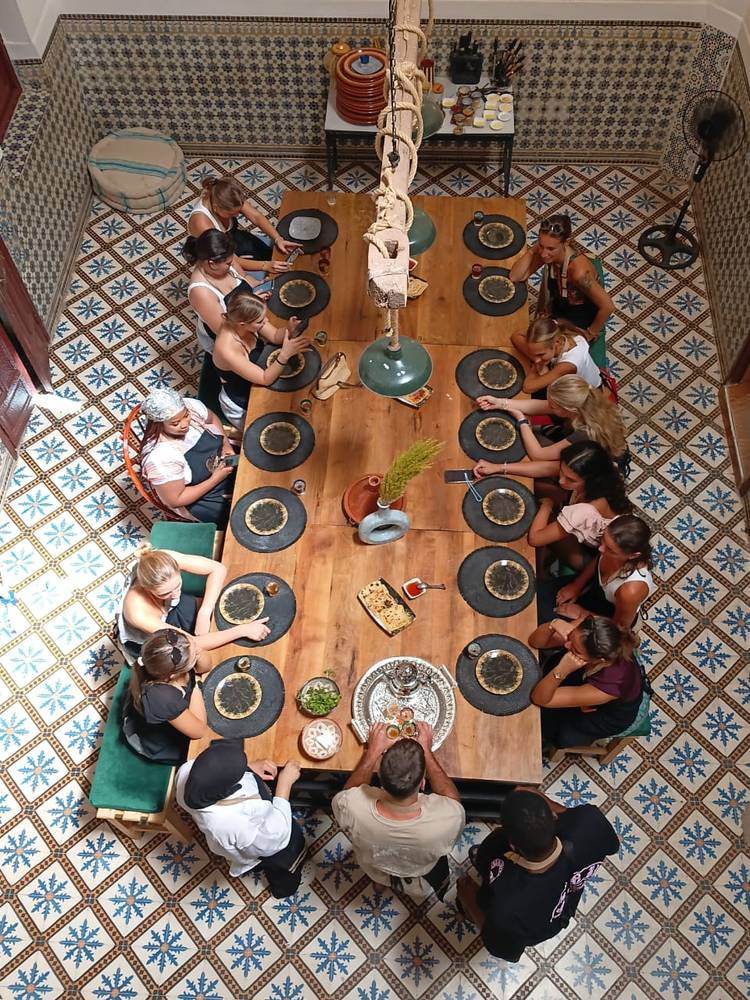
Every kitchen has its own rhythm, but most hands-on classes follow the same four steps. Ours lasts about three hours in total.
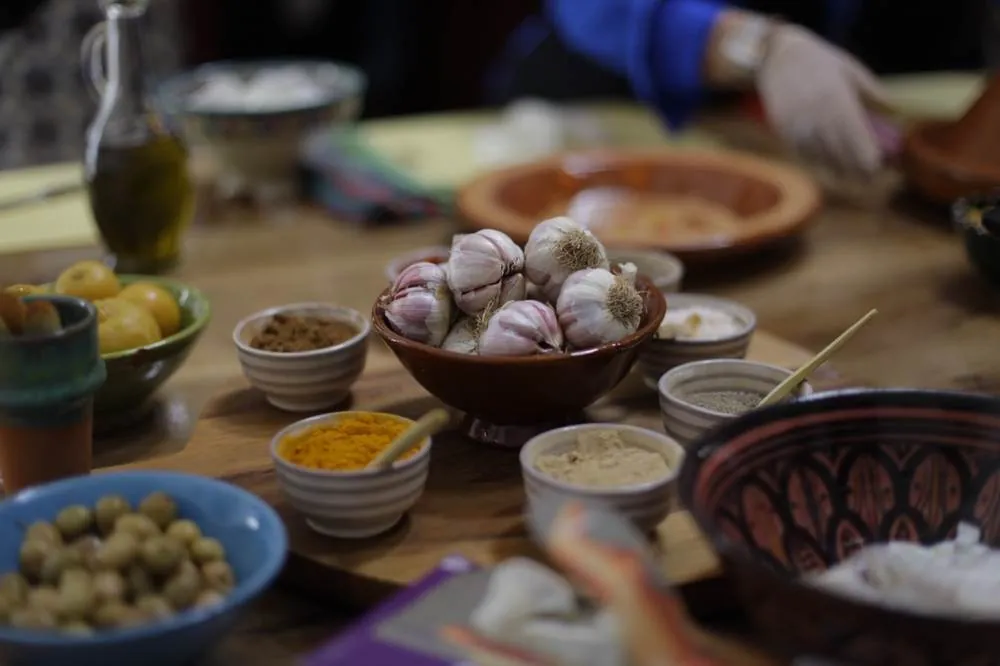
- Welcome and ingredients. You meet your chef, look at the fresh vegetables and spices, and choose the dishes you will prepare.
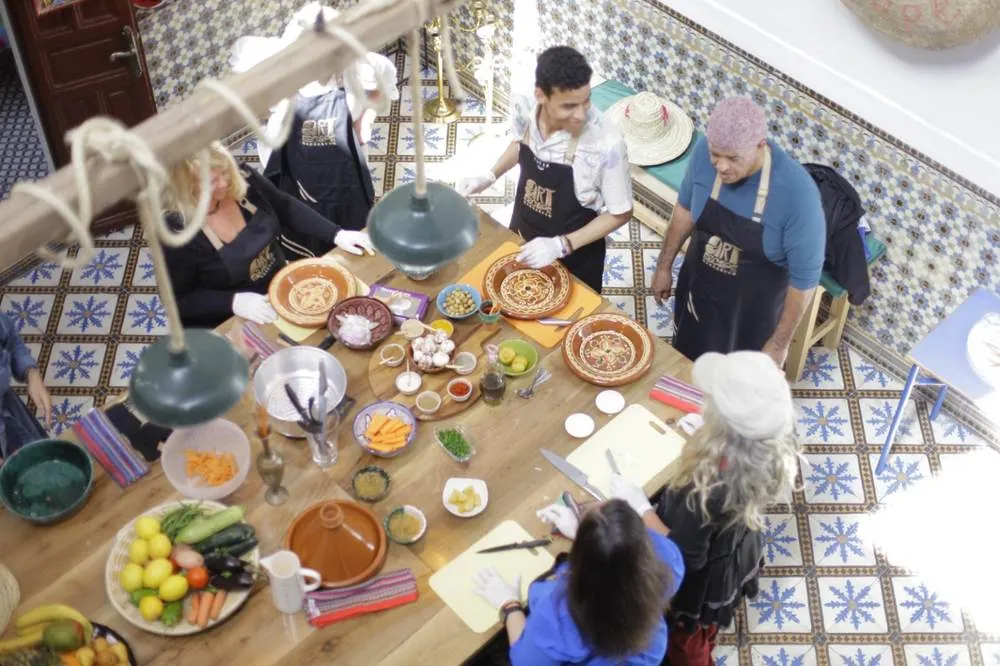
- Cooking side by side. You prepare a tagine, knead and bake traditional bread and make Moroccan salads — step by step, with the chef beside you.
- Tea and stories. While the tagine simmers, fresh mint tea is served and there is time for questions.
- Eating together. Everyone sits down to share the meal they cooked.

What will you cook?
The classic Marrakech menu is built around the tagine — the stew and the cone-shaped clay pot it is cooked in. Around it you will usually find:
- Tagine with vegetables, or with chicken or meat, slow-cooked with ginger, cumin, paprika, turmeric and saffron.
- Khobz, the round Moroccan bread used instead of cutlery to scoop up the sauce.
- Moroccan salads — fresh tomato and cucumber with herbs and olive oil, and cooked vegetable salads.
- Mint tea, made with green tea, fresh mint and sugar, and poured from a height to create a light foam.
Some classes also teach couscous (traditionally a Friday family dish), pastilla or harira soup. At Marrakech Local Experience you choose between two menus when booking: a vegetarian tagine or a tagine with meat or chicken, both with bread, salads and mint tea. Want to practise before you come? Try our easy vegetable tagine recipe.
How to choose the right cooking class
Marrakech has dozens of options, from large hotel demonstrations to small family kitchens. These questions will help you choose:
- Hands-on or demonstration? In some classes you mostly watch. If you want to learn, check that every guest cooks.
- How big is the group? Small groups mean more time with the chef and more questions answered.
- Where does it take place? A home or riad kitchen feels very different from a restaurant or hotel.
- Is a market visit included? Some classes start in the souk to buy ingredients. Ours does not include a souk visit, so you can explore the market on your own time.
- Can they adapt to your diet? Vegetarian, allergies, no pork — a good host asks in advance.
- What is included? Look at the full price: ingredients, the meal, drinks, recipes and transport.
- What do other guests say? Read recent reviews, especially the detailed ones.
How much does a cooking class in Marrakech cost?
Prices vary a lot depending on the group size, the location and whether a market tour or transport is included, so compare what you actually get rather than the headline price.
Our class costs €35 per person for about three hours in a small group. That includes a local chef, all fresh ingredients and spices, the riad kitchen, tools and aprons, mint tea, the three-course meal you cook and a recipe booklet to take home. Our cooking class is rated 4.9/5 from 182 reviews on Viator.

Tips before you go
- Arrive about 10 minutes early so the class can start on time.
- Mention allergies and dietary needs when you book, not on the day.
- Keep breakfast light — you will eat a full meal.
- Wear comfortable clothes and shoes; you will stand and move around the kitchen.
- Ask questions. The stories behind the dishes are half of the experience.
- Check the cancellation policy. Ours offers free cancellation up to 24 hours before the class.
Planning the rest of your stay? Here are 10 hands-on things to do in Marrakech, beyond the souks.
Questions & answers
Do I need cooking experience?
No. A good class is beginner-friendly. In ours, the chef guides every step and you take home a recipe booklet.
How long does a cooking class in Marrakech last?
Most hands-on classes last between two and four hours. Ours takes about three hours, from the welcome to the last glass of mint tea.
Is there a vegetarian option?
Yes. Moroccan cuisine has many vegetable dishes. With us, the vegetarian tagine is one of the two menus you can choose when booking.
Can children join?
Yes. Families, couples and friends are all welcome. Message us on WhatsApp to arrange a private session.
Which languages are spoken?
Our cooking class is held in English and French.